
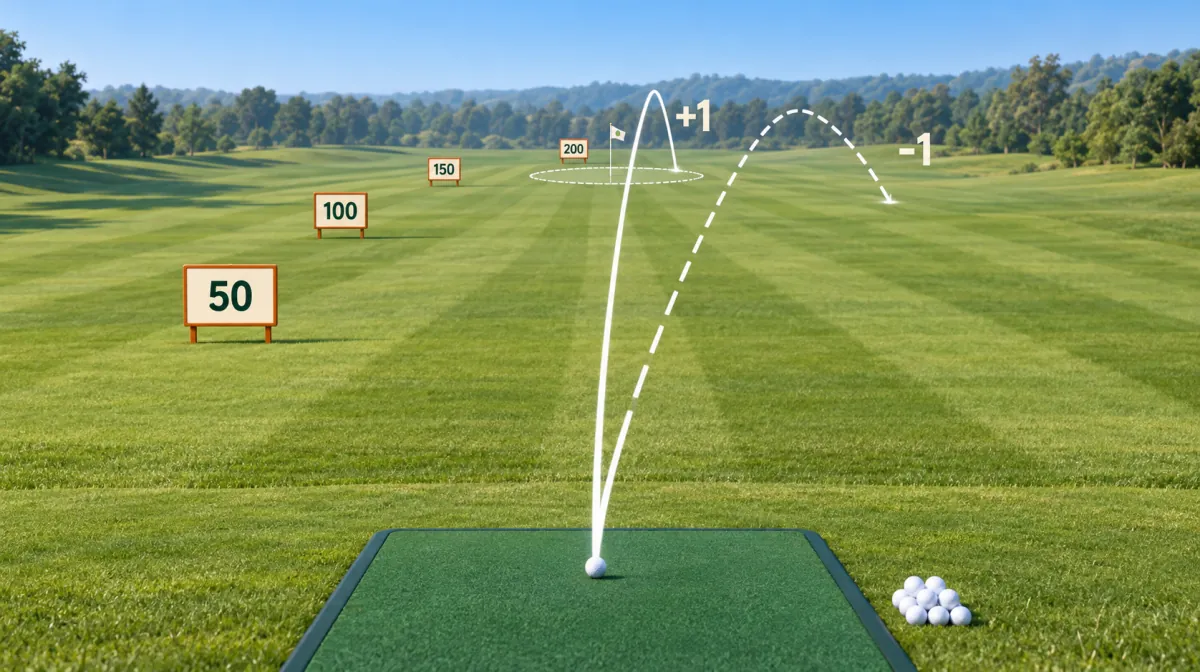
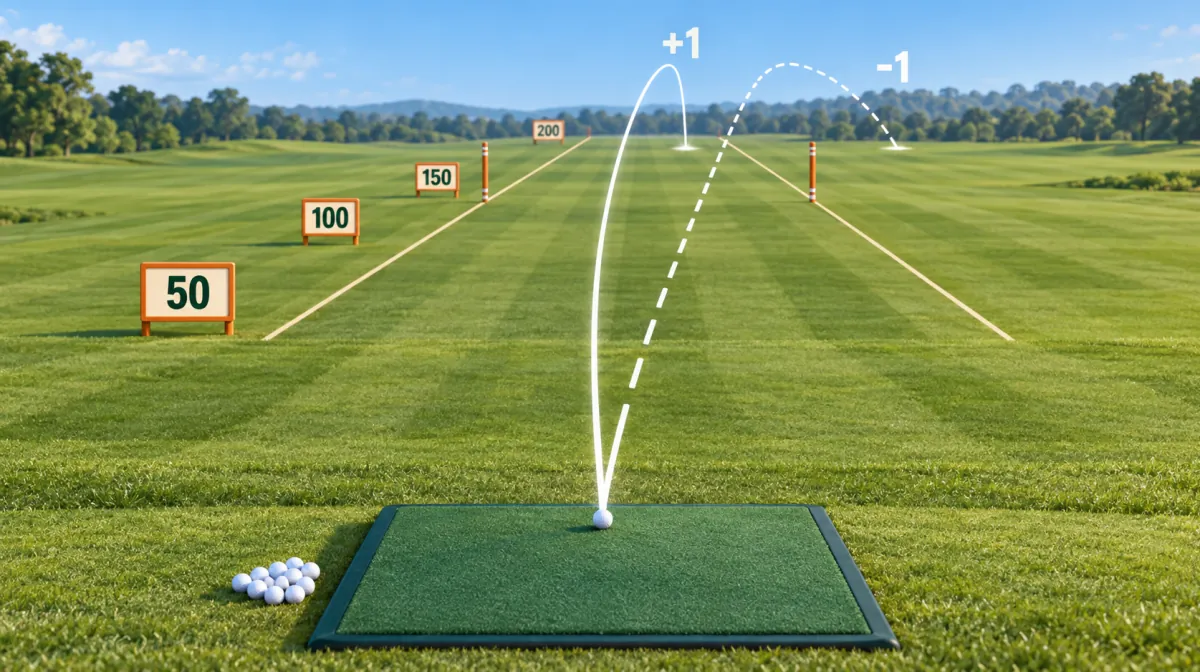
Miss pattern & drift

Is your miss one-way or two-way, and do you fade late in a set?

In the app: Miss pattern + Within-session drift

What it measures

  • Miss pattern pools your left and right misses. 70 % or more on one side is a one-way miss. At least 30 % on each side is a two-way miss. It needs 8 misses.
  • Drift compares shots 1–5 with shots 6–10 across sessions of 6 shots or more. The chart appears after 3 such sessions, and a verdict needs 5 sessions and a gap of 10 points.

How it helps you

A one-way miss can be managed with your aim. A two-way miss is what ruins scorecards, and needs work on your swing.

Drift tells you if your problem is focus or fatigue rather than technique. The fix for that takes a few seconds, not a few months.

Drills behind this insight

Record any of these in the app and this insight updates when you save the session.

Speed Ladder is left out, because it records no left or right.

Examples, and what the coach says

Example 1

A two-way miss

16 misses to the left or right across recent sessions.

Which side your misses go
LeftRight
Left
7 (44 %)
Right
9 (56 %)

How to read it

  • Left is 44 % and right is 56 %, so neither side is dominant.
  • Both are over the 30 % line, which makes this a two-way miss.
  • Balanced looks fair but is the hardest pattern, because you cannot aim away from it.
AI coachFocus: Pick one shot shape

7 of your 16 misses go left and 9 go right. With a miss on both sides you have no safe aiming line, and this is what turns one bad drive into a lost ball.

Next session: Use one stock shot shape for your next set before you change your aim. Getting to a one-sided miss is the goal, even if the total stays the same for a while.

Example 2

A one-way miss

18 misses to the left or right across recent sessions.

Which side your misses go
LeftRight
Left
4 (22 %)
Right
14 (78 %)

How to read it

  • 14 of 18 misses go right, which is 78 % and clears the 70 % line.
  • A consistent miss is a tool as well as a fault. You know where it will go.
  • You can often gain strokes by using it before you try to remove it.
AI coachFocus: Aim away from your miss

14 of your 18 misses go right. You have a predictable miss, which is a lot easier to play with than a two-way one.

Next session: Aim at the left edge of the corridor, and let your usual miss work back into the middle. Run Fairway Accuracy with that aim and see if the hit rate climbs.

Example 3

Fading late in a set

8 sessions of 10 shots, so 40 shots in each half.

In the corridor, early and late in a set
Shots 1–5
65 % 26 of 40
Shots 6–10
45 % 18 of 40

How to read it

  • The same player and the same corridor, with only the time in the set changing.
  • A drop from 65 % to 45 % is 20 points, double the 10 needed to call it.
  • Eight sessions is enough to rule out a single bad day.
AI coachFocus: Reset at the halfway point

Across 8 sessions, your in-corridor rate drops from 65 % to 45 % late in a set. Your first five shots show what you can do, so this looks like focus or routine, not a technical issue.

Next session: Use a brief setup reset after shot 5 before you start the second half. On the course, this is what the 14th tee will feel like.

All numbers here are illustrative sample data, and the coach notes show the kind of advice you get. In the app, the AI coach reads all your off the tee data and gives you one focus with its reasoning, based on your own sessions. Each chart also has a one-line takeaway of its own.